Independent heritage and digital-office initiative · awaiting institutional review
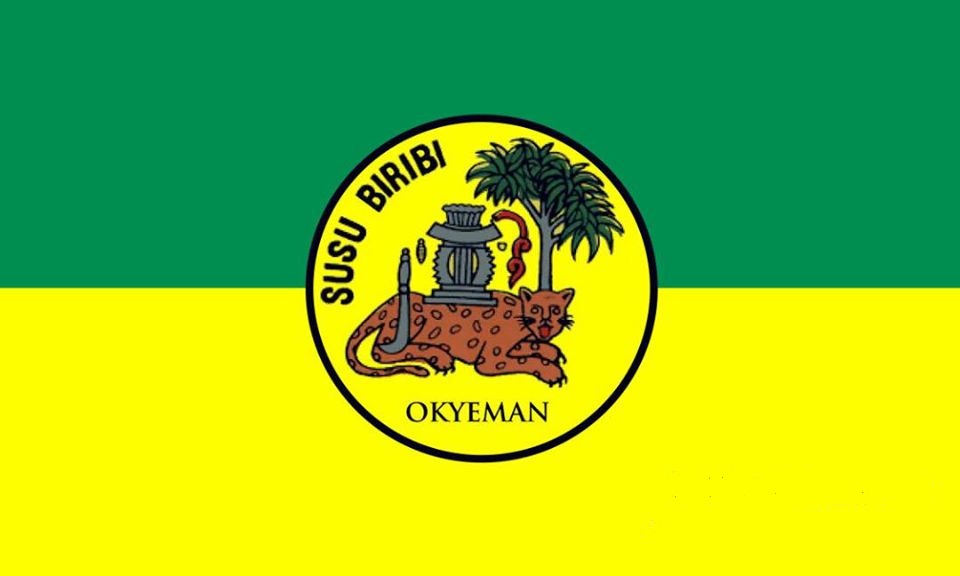
Akyem Abuakwa Okyeman state emblem — SusubiribiOfori Panin FieOkyeman digital archive initiative

Historical guide

Okyeman across time.

A layered introduction to Akyem Abuakwa history, with written evidence, oral-history notes and disputed chronology kept visibly separate.
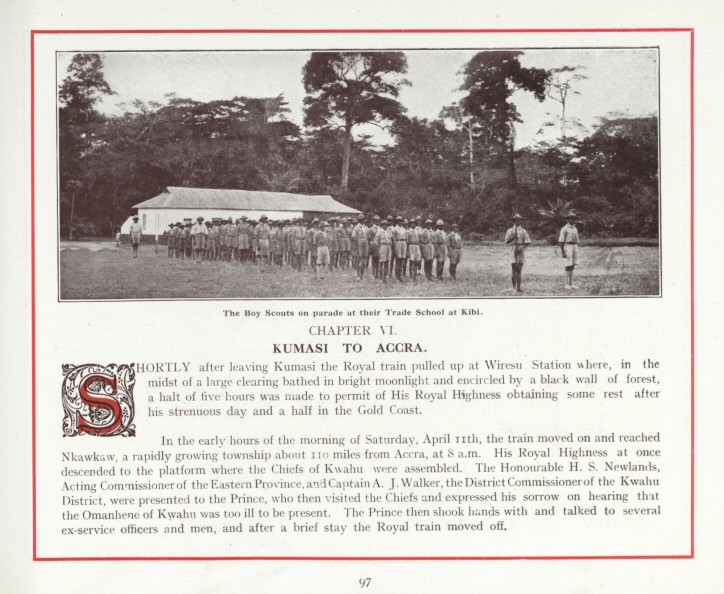
Historical view of Kyebi in 1925
Editorial method

Early chronology, spellings and migration narratives are not presented as settled where sources differ. “Public-source verified” means traceable to the cited publication—not yet certified by the Palace.

01

Before c. 1700

Origins and state formation

Under palace review

Akyem Abuakwa identity is connected in historical writing and oral tradition to Asona ancestry, Adanse and migration across the Pra. Details vary between oral accounts and later written histories.

Oral-history layer: wording and sequence require custodial review.Evidence: S01
02

c. 1700–1727

Ofori Panin and consolidation

Public-source verified

Robert Addo-Fening’s major study uses Ofori Panin as the starting point for its documented history of Akyem Abuakwa. Exact early chronology should be checked against the palace register.

Chronology subject to verification against the official palace register.Evidence: S01
03

18th century

Regional power and resettlement

Public-source verified

Written histories place Akyem Abuakwa within the changing political, military and commercial landscape of southern Ghana. Settlement narratives, capitals and precise sequences must be read beside stool traditions.

Do not treat later summaries as substitutes for the official oral and stool record.Evidence: S01
04

Public chronology: 1817–1835

Nana Afia Dokuaa

Under palace review

Public historical compilations identify Nana Afia Dokuaa as the woman who occupied the Ofori Stool in the early nineteenth century. Her military and diplomatic record requires comparison of scholarship, oral history and palace evidence.

Dates and frequently repeated campaign claims remain under palace review.Evidence: S01, S10
05

Public chronology: 1866–1887

Amoako Atta I and the colonial encounter

Public-source verified

The surviving written and photographic record connects Amoako Atta I with missionary engagement, colonial pressure, exile and return. Basel Mission images provide rare visual evidence from this period.

Biographical interpretation should be reconciled with stool histories and original correspondence.Evidence: S01, S06, S11
06

Public chronology: 1912–1943

Nana Sir Ofori Atta I

Public-source verified

Scholarship and archival collections document a period of major institutional change associated with education, administration, customary law, representation and statecraft under Nana Sir Ofori Atta I.

The platform distinguishes documented public work from later family or political interpretation.Evidence: S01, S08, S09, S12, S13
07

1943–1976

Post-war and independence-era transitions

Under palace review

The succession record spans the first and second periods attributed to Nana Ofori Atta II, the reigns attributed to Nana Amoako Atta IV and Nana Ofori Atta III, and regency entries that require formal register review.

Chronology subject to verification against the official palace register.Evidence: S14, S15, S18
08

Public chronology: 1976–1999

Osagyefuo Kuntunkununku II

Under palace review

Public records describe a medically trained Okyenhene whose reign intersected with national public service and institutional development. A Palace-approved biography and programme archive are still needed.

Public biographical leads have not yet been certified as an official profile.Evidence: S16, S17
09

1999–present

Contemporary Okyeman

Public-source verified

Osagyefuo Amoatia Ofori Panin was enstooled on 4 October 1999. Public records highlight education, environmental stewardship and institutional development during his reign.

Public biography and anniversary reporting; programme outcomes need primary records.Evidence: S03, S04

A documented frame

From Ofori Panin to the contemporary stool

Okyeman is one of the historic Akyem polities of southern Ghana. Its political history is preserved through stool traditions, oral testimony, family and palace records, missionary and colonial archives, newspapers and modern scholarship.

Robert Addo-Fening’s Akyem Abuakwa, 1700–1943 provides the strongest single scholarly spine currently used in this prototype. It traces changes in authority, land, education and statecraft from Ofori Panin through the era of Nana Sir Ofori Atta I.

The contemporary record begins here with Osagyefuo Amoatia Ofori Panin’s enstoolment on 4 October 1999. His biography and programmes need a primary institutional dossier before they can be treated as a complete official profile.

Research dossiers

Six fields for deeper study.

These summaries connect the current evidence without pretending that an online compilation can replace custodians, the palace register or original archives.

01

Government and customary authority

Akyem Abuakwa’s internal history must be read alongside Ghana’s constitutional recognition of chieftaincy, traditional councils and the Houses of Chiefs. Constitutional recognition does not itself settle a particular stool history or division list.

Public-source verifiedEvidence: S02 · S19
02

Customary law in the archival record

Digitised records on funeral customs and loans show that rules and social obligations were being written, debated and administered in twentieth-century Abuakwa. Their historical language requires contextual reading.

Public-source verifiedEvidence: S08 · S09
03

Education and institutional change

Archival photographs and scholarship identify education as an important strand of twentieth-century statecraft. School and trade-training records are preserved as research evidence, not a complete official programme history.

Public-source verifiedEvidence: S01 · S05 · S06 · S13
04

Traditional and government geographies

Okyeman’s traditional territory and Ghana’s municipal boundaries are different systems. The directory records municipal sources without treating them as proof of a town’s traditional division.

Public-source verifiedEvidence: S05 · S20 · S21
05

Women, lineage and leadership

Nana Afia Dokuaa’s place in the public succession record makes women’s authority, queen-mother institutions, lineage and diplomacy a priority research field. Claims need oral testimony and primary documentation.

Under palace reviewEvidence: S01 · S10
06

Images as evidence

Portraits, royal orchestras, schools, durbars and festival photographs can document material culture and public life. Every image still needs creator, date, place, people, rights and an authorised caption.

Public-source verifiedEvidence: S06 · S12
Core reading

Start with traceable sources.

S01
Akyem Abuakwa, 1700–1943: From Ofori Panin to Sir Ofori AttaRobert Addo-Fening · 1997 · Book
S02
The Hidden Elements of Democracy Among Akyem ChieftaincyNapoleon Bamfo · 2000 · Academic article
S03
Okyenhene launches Silver Jubilee anniversaryGraphic Communications Group · 2024 · News report
S04
Our Patron: Osagyefuo Amoatia Ofori PaninWest African Genetic Medicine Centre, University of Ghana · Current page · Institutional record
S05
Socio-economic profile of OkyemanUniversity of Ghana journal repository · Research paper · Academic article
S06
Akyem Abuakwa historical photographsThe National Archives (UK) / Wikimedia Commons · 1925 · Archive

Continue research

Trace the royal succession.

The numbered register begins with Nana Atta Apeanin Kwaframoa Woyiawonyi and Nana Kuntunkununku I, while uncertain dates remain clearly marked.

Open succession directory